10 Best Neighborhoods in Raleigh NC in 2026
Looking for the best neighborhoods in Raleigh NC? Here is the honest breakdown by lifestyle, price, and commute, for families, young professionals, and people relocating from out of state.
Max Shepard
Staff Writer

Best neighborhoods in Raleigh NC
The best neighborhoods in Raleigh NC in 2026:
- North Hills — best overall, walkable, central location
- Five Points — best historic charm, top schools nearby
- Cary — best for families, closest to Research Triangle Park
- Apex — best small-town feel, strong schools
- Downtown Raleigh — best for young professionals, urban lifestyle
- East Raleigh — best value close to downtown
- Brier Creek — best budget option, 10 min from RDU airport
Raleigh has a reputation problem. Not a bad one — the city consistently lands on best-places-to-live lists, and for good reason. The problem is that most neighborhood guides treat it as a monolith. "Move to Raleigh" does not tell you whether you should be in Cary or Five Points, North Hills or Downtown, Brier Creek or Mordecai. Those are completely different cities within a city, and choosing wrong costs you commute time, lifestyle satisfaction, and sometimes real money.
This guide breaks down the best neighborhoods in Raleigh NC by what actually matters: who they are for, what they cost in 2026, what commuting from them looks like, and what makes each one genuinely different from the others.
Quick reference: best Raleigh neighborhoods by priority
| Neighborhood | Best for | Median home price | Vibe |
|---|---|---|---|
| North Hills / Midtown | Families, upscale professionals | ~$398,000-500,000 | Walkable, upscale suburban |
| Five Points | Young families, historic charm | ~$593,800 | Walkable, tree-lined, classic |
| Downtown Raleigh | Young professionals, no-car lifestyle | ~$500,000+ | Urban, dense, energetic |
| Glenwood South | Young professionals, nightlife | ~$665,000 | Entertainment district, social |
| Cary | Families, tech workers near RTP | ~$490,000-550,000 | Master-planned, safe, suburban |
| Apex | Families, top schools | ~$460,000-520,000 | Charming, small-town feel |
| Brier Creek | Airport proximity, professionals | ~$279,000-350,000 | Suburban, convenient, affordable |
| Historic Oakwood | History lovers, premium buyers | ~$500,000-1,200,000 | Victorian, walkable, prestigious |
| Boylan Heights | Creatives, young professionals | ~$500,000-700,000 | Historic, artsy, walkable |
| Morrisville | Tech workers, RTP commuters | ~$380,000-450,000 | Diverse, convenient, affordable |
1. North Hills: best overall Raleigh neighborhood in 2026

North Hills sits in Midtown Raleigh and delivers something rare: genuine walkability with suburban amenities, good schools, and a central location that makes commutes manageable in almost any direction.
The anchor is the North Hills district itself, a redeveloped town center with shops, restaurants, a farmers market, and green space that has made the area feel genuinely urban without the density downsides of downtown. The North Carolina Museum of Art is five minutes away, with 164 acres of sculpture gardens and trails that residents treat as their backyard.
Median home prices run $398,000-$500,000 depending on the specific street and home type, covering a range from mid-century ranches to newer townhomes and condos. Schools nearby including Lacy Elementary and LeRoy Martin Magnet consistently rank among the better options in Wake County.
Commute to downtown Raleigh: 15 minutes. Commute to Research Triangle Park: 20-25 minutes. The location works for both.
Best for: families who want walkable suburban life, professionals who need access to both downtown and RTP, people who want community infrastructure without full urban density.
2. Five Points: best historic neighborhood in Raleigh

Five Points is where five historic districts converge just north of downtown, and the result is one of the most characterful neighborhoods in any mid-size Southern city. Tree-lined streets, front porches, craftsman bungalows, Tudor homes, and genuine walkability to coffee shops, restaurants, and local businesses.
The neighborhood has real school quality nearby, Underwood Magnet Elementary, Oberlin Magnet Middle, and Broughton Magnet High are within the area, and Wake County's magnet school system means families have genuine options. The Rialto Theatre, local restaurants along the Five Points intersection, and green spaces including Roanoke Park and Fred Fletcher Park give the neighborhood a complete daily-life infrastructure.
Median home prices around $593,800 reflect the desirability. You are not finding a starter home here for $300,000. But compared to comparable historic walkable neighborhoods in Northern Virginia, Boston suburbs, or Bay Area equivalents, the prices are accessible.
Best for: families who want historic character and neighborhood feel, young professionals who want walkability without downtown density, buyers who prioritize architectural character and mature trees.
3. Downtown Raleigh: best for car-free urban lifestyle

Downtown Raleigh has genuinely transformed over the past decade. The Warehouse District along Glenwood South, the Fayetteville Street corridor, Moore Square, and the emerging Smoky Hollow development have created an urban core with real density, walkable restaurants, and a nightlife scene that surprises people who visited years ago.
Housing runs from luxury condos and lofts to renovated older buildings, with median prices depending heavily on building and unit type. The Fenton development and newer mixed-use projects have added significant inventory.
The honest trade-off: Downtown Raleigh is still not San Francisco or DC-level urban. You will want a car for some things. But for someone coming from a dense coastal city who wants to stay within walking distance of their daily life, downtown is the closest Raleigh gets.
Commute to RTP from downtown runs 25-30 minutes, which is workable but not ideal for daily driving. GoRaleigh bus service and the upcoming Bus Rapid Transit expansion will improve options.
Best for: young professionals who want urban density, people coming from walkable coastal cities, anyone who wants to walk to restaurants and entertainment most nights.
4. Glenwood South: best neighborhood for social life

Glenwood South is Raleigh's entertainment district, and it is genuinely one of the best bar and restaurant corridors in the Southeast for a city its size. The stretch along Glenwood Avenue has independent restaurants, rooftop bars, breweries, and enough variety that residents eat and drink within walking distance most nights.
The residential side offers condos and apartments east of Glenwood and bungalows and craftsman homes to the west. Median home prices for houses run around $665,000, making it one of the pricier Raleigh neighborhoods. But the rental market here is active and rates for apartments run $1,800-$2,200 for one-bedrooms, comparable to what you would pay in North Hills or Midtown.
Pullen Park, one of the oldest public parks in North Carolina, sits nearby with a carousel, pedal boats, and a pool.
Best for: young professionals who prioritize social infrastructure, renters who want walkable nightlife, people who want to live in the action rather than commute to it on weekends.
5. Cary: best suburb for families and tech workers

Cary is not technically Raleigh but it belongs on this list because a large percentage of people who say they are moving to Raleigh end up in Cary. And with good reason.
Cary consistently ranks as one of the safest cities in North Carolina and one of the best places to raise a family nationally. The town is master-planned in a way that shows, the parks, greenways, and public spaces are genuinely well-maintained. Schools are strong across the board.
Crucially for tech workers, Cary sits adjacent to Research Triangle Park. A Cisco or SAS employee in RTP can be home in 10-15 minutes from Cary rather than 25-30 from North Raleigh or downtown. That commute difference compresses over a career into significant time.
Median home prices run $490,000-$550,000. The town has genuine amenities beyond just suburban infrastructure, SAS has invested significantly in arts and community institutions.
Best for: families who want excellent schools and safety, tech workers at RTP who want the shortest commute, people who prioritize community infrastructure and outdoor spaces.
For context on the full cost-of-living picture including rent and utilities, see our Raleigh cost of living guide.
6. Apex: best small-town feel with Raleigh access

Apex has a genuine historic downtown, a small but real main street with local restaurants, a brewery, and independent shops, that gives it a character Cary's planned development lacks. It has been called "The Peak of Good Living" by its residents, which sounds like a chamber of commerce line until you spend time there and understand why people say it.
Schools in Apex draw from Wake County's strong system with additional options through the town's own elementary schools. Home prices run $460,000-$520,000, slightly more accessible than Cary.
The commute to RTP is 15-20 minutes. Downtown Raleigh is 25-30 minutes. The town has grown significantly in the past decade but has managed its growth better than some comparable suburbs.
Best for: families who want authentic small-town character alongside suburban amenities, buyers who want to be slightly outside the Cary price premium, people who value walkable town centers.
7. Brier Creek: best value neighborhood near RDU airport

Brier Creek is a master-planned community in northwest Raleigh built around Brier Creek Commons, a large outdoor shopping center. It is less characterful than Five Points or Boylan Heights, but it delivers something those neighborhoods cannot: a median home price around $279,000-$350,000 combined with proximity to RDU International Airport (literally 5-10 minutes), Brier Creek Country Club, and easy I-540 access.
For professionals who travel frequently, living 10 minutes from the airport with easy highway access is a real quality-of-life benefit that is hard to put a price on. Safety ratings are strong, with Brier Creek ranking as safer than 83% of Raleigh neighborhoods.
Best for: frequent travelers, professionals who need RDU access, budget-conscious buyers who want suburban infrastructure, families who prioritize safety and value over neighborhood character.
8. Historic Oakwood: best premium neighborhood in Raleigh
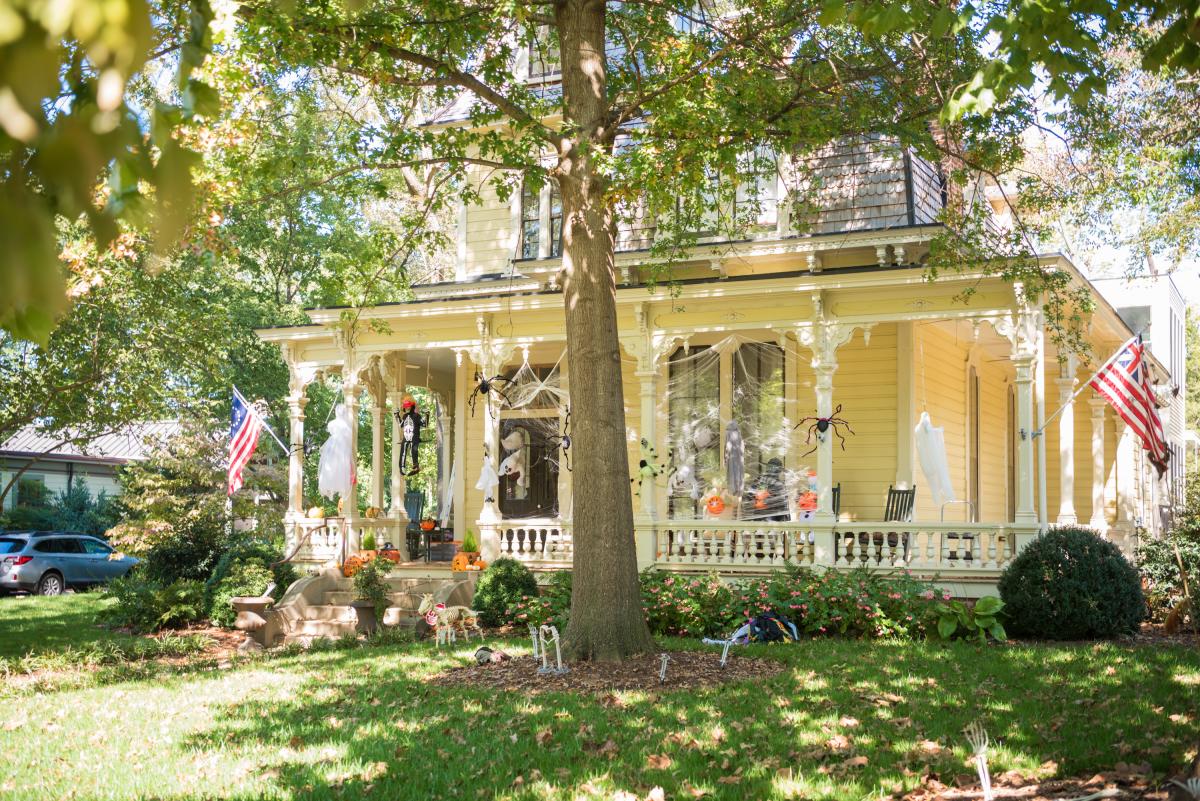
Historic Oakwood sits on the National Register of Historic Places and is the most architecturally significant neighborhood in Raleigh. Victorian, Queen Anne, and Colonial Revival homes from the late 19th and early 20th century, meticulously maintained or restored, line quiet streets just east of downtown.
Prices range from $500,000 on the lower end to $1.2 million for larger restored estates. The investment in these homes is real, you are buying a piece of architecture that cannot be replicated, in a neighborhood that will never be demolished for a strip mall.
Proximity to downtown means walkability to Raleigh's best restaurants and cultural institutions. Mordecai Historic Park is within the neighborhood.
Best for: buyers who prioritize architectural character and history, professionals who want walkable urban access from a genuinely distinctive home, buyers with $700,000+ budgets who want something other than new construction.
9. Boylan Heights: best creative neighborhood in Raleigh

Boylan Heights is Raleigh's most distinctly artsy neighborhood, the annual Boylan Heights ArtWalk has been a community institution for decades. Historic craftsman homes, tree-lined streets, front porch culture, and proximity to Dorothea Dix Park (308 acres with some of the best views of the Raleigh skyline anywhere) make it genuinely charming.
The neighborhood sits just west of downtown, with walkable access to restaurants along the nearby corridors. Dorothea Dix hosts a weekly farmers market in season.
Prices run $500,000-$700,000 for single-family homes, with some renovation opportunities at the lower end of that range.
Best for: creative professionals, people who value neighborhood character and community events, buyers who want historic homes with urban proximity.
10. Morrisville: best value for RTP workers

Morrisville sits directly adjacent to Research Triangle Park, making it the shortest commute option of any neighborhood on this list for people working at Cisco, IBM, Red Hat, or SAS. It also has one of the most genuinely diverse demographics of any Triangle community, reflecting the international workforce that RTP has attracted.
Home prices run $380,000-$450,000, more accessible than Cary with comparable proximity to the park. Niche ranks Morrisville as the top community in the Raleigh area for young professionals.
Best for: tech workers at RTP who want the absolute shortest commute, buyers who want Cary-adjacent location at slightly lower prices, international transplants who value demographic diversity.
Raleigh suburbs worth knowing about
Beyond these neighborhoods, several suburbs function as their own cities with distinct characters:
Wake Forest (north): small-town character, new construction, 30 minutes to downtown, $380,000-$450,000 median.
Holly Springs (southwest): fast-growing, family-focused, strong schools, newer construction, $420,000-$500,000 median.
Knightdale (east): most affordable close suburb, $280,000-$350,000 median, 20 minutes to downtown.
Fuquay-Varina (south): small-town feel, growing brewery scene, most affordable of the main suburbs, $320,000-$390,000 median.
How to choose the right Raleigh neighborhood
If commute to RTP is the priority: Cary, Morrisville, or Apex. All are 10-20 minutes to the park.
If schools are the priority: Cary (consistently highest-rated), Apex (strong and improving), Wake Forest (good and less expensive than Cary).
If walkability and urban life matter most: Downtown Raleigh, Glenwood South, or Five Points.
If budget is the primary driver: Brier Creek, Knightdale, or Fuquay-Varina for the lowest prices while staying in the metro.
If you want neighborhood character: Five Points, Historic Oakwood, or Boylan Heights.
If you are moving from out of state and unsure: Rent for 6-12 months before buying. The Raleigh market moves fast, prices vary significantly by micro-location, and you will have a much better sense of where you actually want to live after experiencing the commutes and communities yourself.
For the full picture on what moving to Raleigh looks like beyond neighborhood selection, our complete Raleigh moving guide covers jobs, culture, and daily life. And if you are coming from California specifically, our California to North Carolina guide breaks down the full financial comparison.
FAQ
What is the best neighborhood in Raleigh NC?
North Hills and Five Points consistently rank as the top overall neighborhoods for most buyers and renters. North Hills offers walkable suburban life with strong schools and central location. Five Points delivers historic character, genuine walkability, and a community feel. For families specifically, Cary and Apex deliver the highest-rated schools in the metro.
What are the best neighborhoods in Raleigh for young professionals?
Downtown Raleigh, Glenwood South, and Morrisville are the top picks. Downtown and Glenwood South for urban lifestyle and walkable nightlife. Morrisville for proximity to RTP employers with affordable housing and a young demographic.
What is the safest neighborhood in Raleigh NC?
Historic Oakwood, Cary, and Brier Creek consistently rank highest for safety. Cary as a city is safer than most Raleigh neighborhoods. Brier Creek ranks safer than 83% of Raleigh neighborhoods within the city limits.
What are the best Raleigh neighborhoods for families?
Cary, Five Points, North Hills, and Apex are the top family neighborhoods. Cary has the strongest school ratings in the metro. Five Points has excellent magnet school access. North Hills has walkable community infrastructure. Apex has small-town character with strong schools.
Is Raleigh NC affordable to live in?
Compared to coastal metro areas, yes. Raleigh's cost of living runs about 2% above the national average, which is dramatically cheaper than comparable cities in the Northeast or on the West Coast. Median home prices range from $279,000 in Brier Creek to $665,000 in Glenwood South, with most desirable family neighborhoods falling in the $400,000-$550,000 range. Full cost breakdown in our Raleigh cost of living guide.
Should I live in Raleigh or Cary?
Depends on priorities. Raleigh city neighborhoods like North Hills, Five Points, and Downtown offer more urban character and often better walkability. Cary offers higher school ratings, slightly better safety statistics, and closer proximity to Research Triangle Park. Many families end up in Cary specifically for the schools and RTP commute. Young professionals without school-age children often prefer Raleigh proper for the urban energy.
Related Articles

Best Neighborhoods in Austin TX in 2026: The Complete Guide
Looking for the best neighborhoods in Austin TX? Here is the honest breakdown by lifestyle, price, and commute, for families, young professionals, and people relocating to Austin from out of state.

Why People Hate North Carolina: Hard To Believe
Why is everyone hating on North Carolina? We surveyed over 100 people from this state and put their responses together in this article.

Why People Hate Florida: My Opinion
Why do people hate Florida? Insurance costs, humid, traffic, bugs, and housing. The list of reasons from people who actually live there.